Learning design · Professional education
LearnLab certificate courses
Translating learning science, analytics, and AI expertise into practical learning for professional audiences.
- My role
- Course and catalog design; development, production, and improvement
- Audience
- Educators, learning designers, and other professionals
- Context
- Carnegie Mellon University · LearnLab
The learning problem
Professional learners need to apply learning science and technical concepts to their own work. Expertise alone is not a course: it needs to become a sequence of objectives, explanations, practice, feedback, and opportunities to demonstrate a skill.
The certificate initiative also needed a repeatable way to develop and maintain learning experiences as it expanded beyond its initial enterprise pilot.
My role and constraints
I launched the initiative through a three-course EY pilot and led its course and catalog development. I partnered with subject-matter experts and enterprise stakeholders to identify needs, define objectives, and develop courses from initial design through launch and revision.
The work spanned multiple topics, audiences, and concurrent projects. I needed to preserve each expert’s subject knowledge while giving learners a clear, consistent experience and making production manageable across the portfolio.
Design decisions
Align the course around performance
I worked with experts to translate broad topics into learning objectives and aligned practice and assessment with those objectives. This made the desired learner performance explicit before developing the instructional assets.
Standardize the production process
I created and standardized storyboards, scripts, diagrams, and slide-to-video workflows. Reusable assets and processes supported course production and updates across the portfolio.
Support decisions at the catalog level
The catalog makes the subject, intended audience, and next step visible so professionals can find an appropriate learning experience. A clear entry point helps newcomers orient themselves before exploring the wider offering.
Use learning data to guide revision
I analyzed learner interactions and learning curves to guide course improvements. Assessment quality and instructional alignment also became repeatable review tasks supported by reusable AI workflows.
Inside the experience
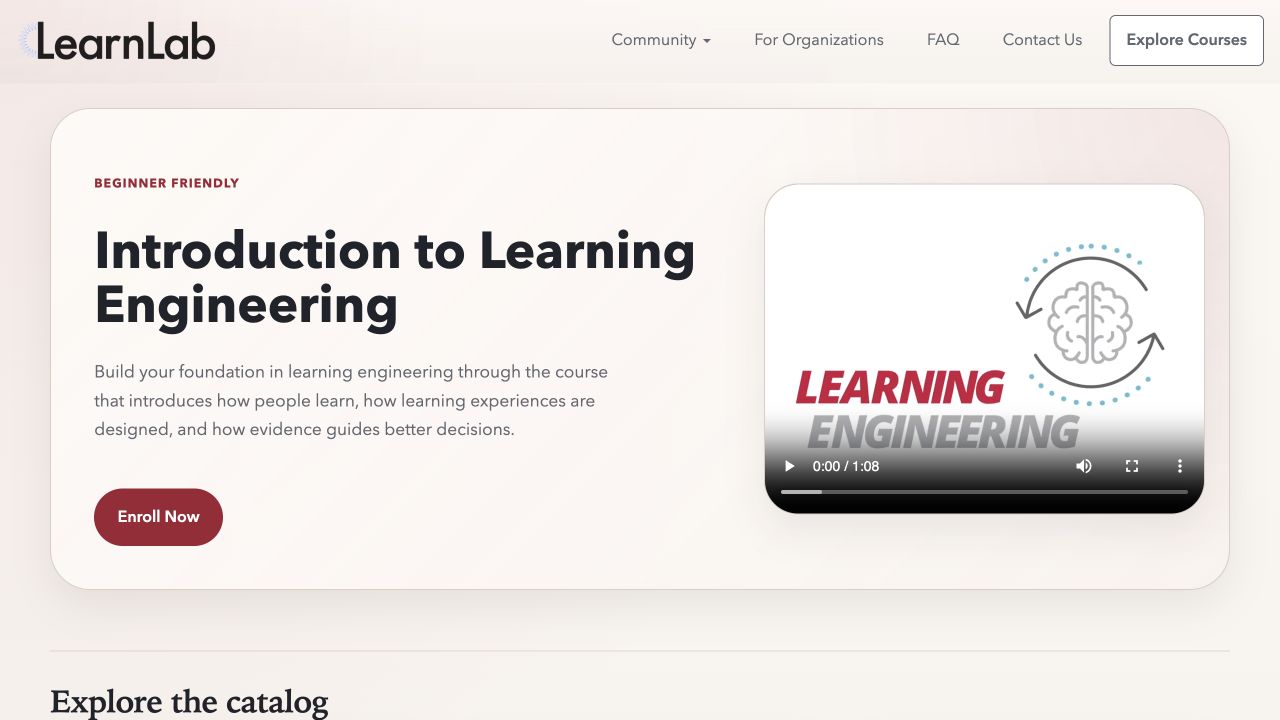
An example of the learning approach
The course on using generative AI to develop active learning experiences connects AI capability with learning-design tasks. Author Your First Skill provides a closer look at the hands-on workshop and interactive lesson design.
Evaluation and learning
The initiative grew beyond the EY pilot to issue more than 600 certificates annually. The model was adapted across CMU departments and Mastercard Foundation’s 21 African learning centers.
Learning-curve analyses informed successive course revisions. Estimated cumulative mastery increased from 71% in the initial offering to 88% in later iterations. This is an estimate across course offerings, rather than a controlled estimate of the effect of a single design change.
My research on varied questioning also informed assessment practice: the goal is to prepare learners for unfamiliar questions, as well as improve performance during practice. Read Beyond Repetition.
Design takeaway: A growing course portfolio needs both an intentional learner experience and a repeatable improvement process. Alignment, reusable production practices, and learning data connect those two needs.